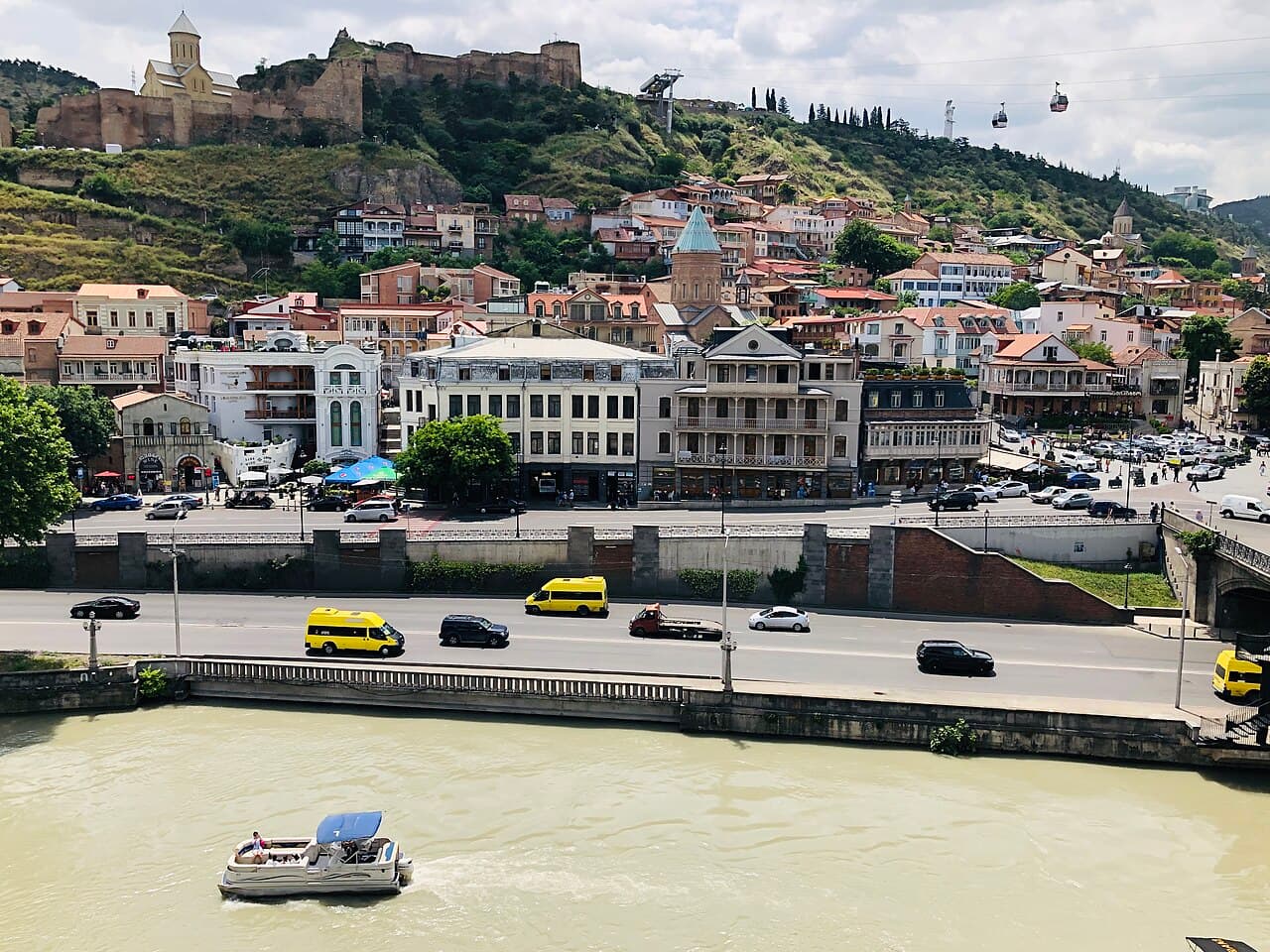
Study in Georgia from Pakistan: Universities, Fees, PMDC Recognition (2026)
Georgia has become one of the fastest-growing study destinations for Pakistani students, with over 150 currently enrolled across universities in Tbilisi and Batumi. The reasons are straightforward: PMDC-recognized medical degrees, tuition fees that are a fraction of what private medical colleges charge in Pakistan, no IELTS requirement, English-medium instruction, and a Muslim-friendly environment with halal food widely available.
This guide covers everything a Pakistani student and their family needs to know about studying in Georgia in 2026 -- from PMDC recognition and fees in PKR to the visa process from Islamabad, the Pakistani community in Tbilisi, and a complete budget breakdown.
Why Pakistani Students Are Choosing Georgia
The Pakistani student community in Georgia has grown substantially since 2020. Here is what drives that growth:
| Factor | Georgia | Pakistani private medical college |
|---|---|---|
| Annual tuition | PKR 9.8-19.6 lakh ($3,500-7,000) | PKR 15-35 lakh |
| Total 5-6 year cost (including living) | PKR 70-120 lakh | PKR 100-200 lakh |
| IELTS required | No | N/A (domestic) |
| Entrance exam required | No | MDCAT |
| Language of instruction | English | English/Urdu |
| Donation/capitation fees | None | Common at many private colleges |
| Degree recognition | PMDC, WHO, European Bologna | PMDC |
| Halal food available | Yes (growing) | Yes (default) |
| Muslim-friendly environment | Yes (mosques, no discrimination) | Yes (home country) |
The value proposition for Pakistani families
A complete MBBS in Georgia costs approximately PKR 70-120 lakh over 6 years including all living expenses. Many Pakistani private medical colleges charge PKR 15-35 lakh per year in tuition alone, making the total domestic cost PKR 100-200 lakh for 5 years. Georgia delivers a European-standard, PMDC-recognized degree at roughly half the cost of private alternatives in Pakistan.
PMDC Recognition
Which Georgian Universities Are PMDC Recognized?
The Pakistan Medical and Dental Council (PMDC) recognizes medical degrees from institutions listed in the World Directory of Medical Schools (WDOMS) that meet specific criteria. Several Georgian medical universities are listed.
Georgian private universities with WDOMS listing (verify with PMDC for current status):
- Caucasus International University (CIU)
- University of Georgia (UG)
- New Vision University
- David Tvildiani Medical University (DTMU)
- Georgian National University SEU
- European University
- BAU International University Batumi
- Caucasus University
- Georgian American University
- International Black Sea University
- And others in the WDOMS database
Always verify before enrolling
PMDC recognition status can change. Before committing to any Georgian university, verify its current status with PMDC directly (pmdc.org.pk) and check the WDOMS listing (world-directory-of-medical-schools.org). Note that as of 2025-2026, Georgian state universities (such as Tbilisi State Medical University) no longer admit international students — all foreign student admissions go through the private universities listed above. EduGeo only partners with private universities that hold current WDOMS listing.
NEB (National Examination Board) Licensing
After completing MBBS in Georgia, Pakistani graduates must pass the NEB licensing examination to practice medicine in Pakistan.
Key NEB facts:
- The NEB exam tests clinical knowledge and competency
- Pass rates are generally reasonable for graduates of recognized institutions
- You can attempt the exam multiple times
- Preparation should begin during the final years of your MBBS program
- Many Pakistani graduates also pursue licensing in the Middle East (UAE MOH, Saudi SCFHS) for career opportunities in the Gulf
Admission Requirements
For MBBS (Medicine)
| Requirement | Details |
|---|---|
| Minimum qualification | FSc (Intermediate) with Pre-Medical (Biology, Chemistry, Physics) |
| Minimum marks | 60% aggregate in science subjects |
| MDCAT | Not required for Georgian university admission |
| IELTS/TOEFL | Not required |
| Age requirement | 17 years minimum at admission |
| Entrance exam | None (direct admission based on FSc results) |
For Other Programs (Business, IT, Engineering)
| Requirement | Details |
|---|---|
| Minimum qualification | FSc/Intermediate for Bachelor's, Bachelor's degree for Master's |
| Minimum marks | 50% aggregate (varies by university) |
| IELTS/TOEFL | Not required |
| Entrance exam | None |
No IELTS, no MDCAT, no entrance test
This is one of Georgia's biggest advantages for Pakistani students. You apply directly with your FSc results. No standardized test scores are needed. All programs are taught in English, and universities accept Pakistani academic credentials without additional testing.
Documents Required for Application
- Matric (SSC) marksheet and certificate (attested)
- FSc (Intermediate/HSSC) marksheet and certificate (attested)
- Valid passport (minimum 18 months validity)
- Passport-size photographs (white background, 3.5x4.5 cm)
- Birth certificate (NADRA B-form or birth certificate)
- Character certificate from last institution
- Medical fitness certificate
- HIV test report
- CNIC copy (or B-form for students under 18)
- Father/guardian CNIC copy
Tuition Fees in PKR (2026)
Using an approximate exchange rate of 1 USD = 280 PKR:
Medical Programs
| University | Annual Fee (USD) | Annual Fee (PKR approx) | 6-Year Total (PKR approx) |
|---|---|---|---|
| Central University of Europe | $4,000 | 11,20,000 | 67,20,000 |
| International Black Sea University | $4,900 | 13,72,000 | 82,32,000 |
| Caucasus International University | $5,000 | 14,00,000 | 84,00,000 |
| East-West Teaching University | $5,000 | 14,00,000 | 84,00,000 |
| Alte University | $5,500 | 15,40,000 | 92,40,000 |
| East European University | $5,500 | 15,40,000 | 92,40,000 |
| Grigol Robakidze University | $5,500 | 15,40,000 | 92,40,000 |
| Georgian National University SEU | $5,900 | 16,52,000 | 99,12,000 |
| David Tvildiani Medical University | $6,000 | 16,80,000 | 1,00,80,000 |
| Caucasus University | $6,000 | 16,80,000 | 1,00,80,000 |
| European University | $6,000 | 16,80,000 | 1,00,80,000 |
| Georgian American University | $6,000 | 16,80,000 | 1,00,80,000 |
| University of Georgia | $6,500 | 18,20,000 | 1,09,20,000 |
| New Vision University | $7,000 | 19,60,000 | 1,17,60,000 |
Other Popular Programs for Pakistani Students
| Program | University | Annual Fee (PKR approx) |
|---|---|---|
| Business Administration (Bachelor's) | Georgian National University SEU | 9,80,000 |
| Computer Science (Bachelor's) | Alte University | 9,80,000 |
| Business Administration (Bachelor's) | Sulkhan-Saba Orbeliani University | 8,40,000 |
| Business Administration (Master's) | University of Georgia | 11,20,000 |
| Computer Science (Bachelor's) | International Black Sea University | 13,72,000 |
Total Budget in PKR: Complete 6-Year MBBS Breakdown
Monthly Living Expenses
| Expense | Budget (PKR/mo) | Comfortable (PKR/mo) |
|---|---|---|
| Accommodation (shared flat) | 28,000-42,000 | 56,000-84,000 |
| Food (cooking at home + some eating out) | 22,000-36,000 | 36,000-56,000 |
| Transport (metro + bus) | 4,200-7,000 | 7,000-11,200 |
| Mobile phone | 1,400-2,800 | 2,200-4,200 |
| Health insurance (monthly equivalent) | 4,700-7,000 | 4,700-7,000 |
| Entertainment | 5,600-11,200 | 11,200-22,400 |
| Miscellaneous | 5,600-8,400 | 8,400-14,000 |
| Monthly total | 71,500-1,14,400 | 1,25,500-1,98,800 |
Complete 6-Year Budget (PKR)
| Cost component | Budget estimate | Comfortable estimate |
|---|---|---|
| Tuition (6 years, mid-range university) | 84,00,000 | 1,00,80,000 |
| Living expenses (72 months) | 51,48,000-82,36,800 | 90,36,000-1,43,13,600 |
| Health insurance (6 years) | 3,36,000-5,04,000 | 3,36,000-5,04,000 |
| Visa and documentation | 42,000-70,000 | 42,000-70,000 |
| Flight tickets (6 round trips) | 5,04,000-8,40,000 | 7,56,000-11,20,000 |
| Initial setup costs | 42,000-70,000 | 70,000-1,12,000 |
| Total 6-year cost | ~70-100 lakh PKR | ~100-150 lakh PKR |
Comparison with Pakistani private medical colleges
Top private medical colleges in Pakistan (Aga Khan, Shifa, LMDC, FMH, CMH) charge PKR 15-35 lakh per year in tuition alone. Over 5 years, tuition alone is PKR 75-175 lakh. Add hostel, food, books, and living costs, and the total easily exceeds PKR 100-200 lakh. Georgia provides a comparable or better education for PKR 70-150 lakh including everything. And there are no donation fees or "self-finance" premiums.
Visa Process for Pakistani Students
Visa Type: D3 (Student Visa)
Pakistani students require a D3 long-term student visa. The process is document-based with no interview.
Where to Apply
Embassy of Georgia in Islamabad:
- Address: House 1, Street 29, F-6/1, Islamabad
- Phone: +92 51 2821551
Required Documents
- Valid passport (minimum 18 months validity, at least 2 blank pages)
- Completed visa application form (available from embassy or online)
- University acceptance/invitation letter (original)
- Proof of financial means -- bank statement showing minimum PKR 8,50,000 (approximately $3,000) maintained for 3-6 months
- Health insurance policy valid in Georgia
- Passport-size photographs (2 photos, white background, 3.5x4.5 cm)
- Proof of accommodation in Georgia
- Academic certificates (Matric, FSc) -- attested copies
- Police clearance certificate (if required)
- Visa fee payment receipt
Process Timeline
| Step | Timeline |
|---|---|
| Document preparation | 1-2 weeks |
| Visa application submission | 1 day (at embassy in Islamabad) |
| Processing time | 20-30 calendar days |
| Passport collection | 2-5 days after decision |
| Total from application to travel-ready | 4-6 weeks |
Visa Tips for Pakistani Students
- Start the visa process 6-8 weeks before your intended departure
- Bank statements should show a stable balance over time, not a sudden deposit right before application
- The university acceptance letter is the most critical document -- apply to the university first
- Health insurance must cover your entire visa period
- Keep all original documents; submit photocopies where allowed
- EduGeo prepares complete visa files for all applicants, reducing the chance of rejection
95%+ approval rate
Pakistani students with complete documentation have a visa approval rate exceeding 95%. Rejections are almost always due to incomplete documents or insufficient financial evidence. Professional document preparation virtually eliminates this risk.
Flights From Pakistan to Georgia
Common Routes
| Route | Airlines | Duration | Approximate cost (one-way) |
|---|---|---|---|
| Islamabad to Tbilisi via Istanbul | Turkish Airlines, PIA+Turkish | 8-10 hours (1 stop) | PKR 50,000-80,000 |
| Karachi to Tbilisi via Istanbul | Turkish Airlines | 9-11 hours (1 stop) | PKR 55,000-85,000 |
| Lahore to Tbilisi via Istanbul | Turkish Airlines | 8-10 hours (1 stop) | PKR 50,000-80,000 |
| Islamabad to Tbilisi via Dubai | flydubai, Air Arabia | 9-12 hours (1 stop) | PKR 45,000-75,000 |
| Karachi to Tbilisi via Dubai/Sharjah | Air Arabia, flydubai | 8-11 hours (1 stop) | PKR 40,000-70,000 |
Tips:
- Istanbul is the most common transit point with the most flight options
- Dubai/Sharjah routes are often cheaper but with longer layovers
- Book 2-3 months in advance for best prices
- Cheapest months: February-March, October-November
- Most expensive: June-August, December
The Pakistani Student Community in Georgia
Community Size and Presence
Over 150 Pakistani students are currently studying in Georgia, primarily in Tbilisi. The community is well-organized and supportive.
Connecting with Fellow Pakistanis
- WhatsApp groups: "Pakistani Students in Georgia," "Pakistani Medical Students Tbilisi" -- contact EduGeo or senior students for invite links
- Telegram channels: Student housing, event announcements, general help
- Facebook groups: "Pakistanis in Georgia," "Pakistani Students Georgia"
- University student societies: Many universities have South Asian or Muslim student organizations
Pakistani Embassy in Tbilisi
- Address: 24, M. Tsinamdzgvrishvili Street, 0102 Tbilisi
- Phone: +995 32 291 43 22
- Register with the embassy upon arrival. This is important for:
- Emergency assistance
- Passport renewal
- Attestation services
- Community notifications
Halal Food and Muslim Life in Georgia
This is one of the most important considerations for Pakistani students. Let us cover it thoroughly.
Halal Food Availability
Good news for Muslim students
Georgia has a native Muslim population of approximately 10-12%, concentrated in the Adjara region (southwest) and among ethnic Azerbaijanis. This means halal infrastructure exists -- you are not starting from zero.
Halal food options in Tbilisi:
| Option | Details | Cost range |
|---|---|---|
| Halal restaurants (Turkish, Iranian, Middle Eastern) | Multiple options near the central mosque and in Saburtalo | PKR 500-1,500 per meal |
| Pakistani/Indian restaurants | Growing number, serving biryani, karahi, etc. | PKR 500-1,200 per meal |
| Halal butcher shops | Available near the mosque area and in Saburtalo | Chicken PKR 500-800/kg, Beef PKR 700-1,200/kg |
| Supermarket halal sections | Carrefour and Goodwill carry some halal-labeled products | Varies |
| Halal frozen chicken | Available at most large supermarkets | PKR 400-700/kg |
| Cooking at home (halal) | Buy meat from halal butchers, cook at home | PKR 15,000-25,000/month total food budget |
Mosques in Tbilisi
- Tbilisi Juma Mosque (Central Mosque) -- near Maidan Square, serves both Sunni and Shia communities. Friday prayers are well attended.
- Smaller prayer houses in various neighborhoods
- University prayer rooms -- some universities provide dedicated prayer spaces. If yours does not, the international student office can usually help arrange a quiet room.
Ramadan in Georgia
- Restaurants and shops continue operating normally, but Georgian society is respectful of fasting
- The Muslim community in Tbilisi organizes iftar gatherings
- Pakistani student groups organize communal iftars -- these become a highlight of the year
- University schedules are generally not adjusted for Ramadan, so plan your energy accordingly
- Suhoor and iftar timing varies significantly by season (long fasts in summer, short in winter)
Cultural Comfort
Pakistan-specific cultural considerations:
- Dress code: No restrictions. Both Western and traditional Pakistani/Islamic dress are entirely acceptable. Women wearing hijab, abaya, or shalwar kameez face no issues.
- Language: Urdu is not spoken, but many Georgian students speak some English, and the university environment is English-medium. Google Translate handles Georgian for daily interactions.
- Gender norms: Georgia is conservative by European standards but liberal by Pakistani standards. Mixed-gender social settings are normal. Respect local customs while maintaining your own.
- Alcohol: Georgia has a strong wine and drinking culture. You will see alcohol in restaurants and social settings. No one will pressure you to drink, and non-drinking is entirely respected. Mocktails and soft drinks are always available.
From Pakistani students in Georgia
"Georgian people are the most hospitable I have met. When they learn you are from Pakistan, they want to feed you and learn about your culture. The adjustment is easier than I expected." -- This sentiment is repeated consistently across Pakistani student groups.
Safety for Pakistani Students
Georgia is one of the safest countries in the broader European region. Pakistani students consistently report feeling safe.
Key Safety Points
- Crime against foreigners: Very rare. Tbilisi has low crime rates overall.
- Religious discrimination: Not a significant issue. Georgia has a long history of religious coexistence.
- Racial attitudes: Generally welcoming. Pakistanis may attract curiosity (stares, especially outside Tbilisi) but not hostility.
- Female safety: Georgian society respects women. Female Pakistani students report feeling comfortable, even when walking alone in central areas.
- Traffic: The one genuine concern. Drivers in Tbilisi can be aggressive. Be careful at pedestrian crossings.
For a detailed safety assessment, read: Is Georgia Safe for International Students?
Weather: Pakistan vs Georgia
| Season | Georgia (Tbilisi) | Lahore | Karachi | Islamabad |
|---|---|---|---|---|
| Summer (Jun-Aug) | 25-38C, dry | 35-45C, monsoon | 30-38C, humid | 33-42C, monsoon |
| Winter (Dec-Feb) | -2 to 8C, cold | 5-20C, cool | 12-25C, mild | 2-18C, cold |
| Coldest expected | -10C (rare) | 0C (rare) | 5C | -2C |
Students from Lahore and Islamabad will find Georgian summers comfortable and winters moderately challenging. Students from Karachi will find winters significantly colder than anything at home.
What to Bring From Pakistan
Essential clothing:
- Warm winter jacket (buy in Pakistan or Georgia)
- Thermal undergarments (2-3 sets)
- Sweaters, hoodies, warm socks
- Waterproof shoes or boots
- Regular clothes for other seasons
Food items from home:
- Biryani masala, karahi masala, nihari masala, chaat masala
- Red chili powder (Pakistani quality)
- Shan/National masala packets (for easy cooking)
- Atta flour (available in Georgia but Pakistani brands are not)
- Pickles (achar)
- Tea (Pakistani brands like Tapal or Lipton Yellow Label)
Other essentials:
- Pressure cooker (Pakistani-style, hard to find in Georgia)
- European plug adapters (Georgia uses Type C/F)
- Prescription medicines with doctor's letter
- Attestated copies of all academic documents
- Pakistani snacks for the first week
Banking and Money Transfers
Opening a Georgian Bank Account
Straightforward process:
- Bank of Georgia or TBC Bank -- walk into any branch with:
- Passport
- University enrollment letter
- Georgian phone number
- Account opens same day, free debit card, mobile app in English
Sending Money from Pakistan
| Method | Transfer time | Fees | Exchange rate |
|---|---|---|---|
| Wise (TransferWise) | 1-2 days | Low (0.5-1%) | Market rate |
| Western Union | Same day (cash pickup) | Moderate (2-4%) | Slightly below market |
| JazzCash/EasyPaisa international | 1-3 days | Low-moderate | Varies |
| Bank wire (SWIFT) | 3-5 days | High (PKR 2,000-5,000 per transfer) | Bank rate (poor) |
Recommendation: Set up Wise for regular monthly transfers. Carry PKR 100,000-150,000 equivalent in USD cash for the first two weeks.
Step-by-Step: From Pakistan to Georgia
6-8 Months Before Intake
- Research programs on EduGeo
- Verify PMDC recognition of your target universities
- Consult with EduGeo counselors
- Gather and attest academic documents (Matric, FSc)
4-6 Months Before Intake
- Submit applications to 2-3 preferred universities
- Receive acceptance letter (2-4 weeks)
- Confirm university choice and pay initial fees
- Begin visa documentation
2-4 Months Before Intake
- Submit D3 visa application at Georgian Embassy in Islamabad
- Arrange health insurance
- Book flights (2-3 months advance for best rates)
- Open Wise account
2-4 Weeks Before Departure
- Receive visa and passport
- Pack essentials (see list above)
- Withdraw/convert cash (USD or EUR)
- Confirm accommodation in Tbilisi
- Inform Pakistani Embassy in Tbilisi of arrival
First Week in Georgia
- Airport pickup (many universities arrange this)
- University registration, student ID
- Georgian SIM card (Magti or Silknet)
- Bank account (Bank of Georgia or TBC)
- Metromoney transport card
- Join Pakistani student WhatsApp groups
- Find nearest halal butcher and mosque
- Explore the neighborhood
Frequently Asked Questions
Is MBBS in Georgia recognized by PMDC?
Yes. Multiple Georgian medical universities are listed in the WDOMS and recognized by PMDC. Always verify your specific university's status with PMDC before enrolling.
Do I need IELTS to study in Georgia?
No. Georgian universities accept Pakistani students without IELTS, TOEFL, or any English proficiency test. All programs are taught in English, and your FSc results are sufficient for admission.
Do I need MDCAT to study MBBS in Georgia?
No. MDCAT is a Pakistani domestic requirement and is not needed for admission to Georgian universities. You apply directly with your FSc results.
What is the total cost of MBBS in Georgia in PKR?
Total 6-year cost including tuition, accommodation, food, and all living expenses ranges from approximately PKR 70-120 lakh for a budget-conscious student, to PKR 100-150 lakh for a comfortable lifestyle.
Is halal food really available in Georgia?
Yes. Georgia has a native Muslim population, halal butcher shops, halal restaurants (Turkish, Iranian, and increasingly Pakistani), and halal products in supermarkets. You will not go hungry, especially if you cook at home.
Can I work part-time while studying?
Yes. International students in Georgia can work part-time. Common jobs include tutoring (English or academic subjects), online freelancing, hospitality work, and call center jobs. Realistic monthly earnings: $200-500 (PKR 56,000-140,000).
Is Georgia safe for Pakistani students?
Yes. Georgia is one of the safest countries in Europe with very low crime rates. The Muslim community is established, and Georgian culture is famously hospitable. Pakistani students consistently report positive experiences.
Can I practice medicine in the Middle East after graduating from Georgia?
Yes. Georgian medical degrees are WHO-listed and recognized by health authorities across the Middle East, including UAE MOH, Saudi SCFHS, Qatar SCH, and others. Many Pakistani graduates pursue careers in the Gulf after completing their Georgian MBBS.
What if my parents want to visit?
Pakistani citizens need a visa to visit Georgia. They should apply at the Georgian Embassy in Islamabad with an invitation letter from you or your university. Processing takes approximately 2-4 weeks.
Ready to Begin?
Over 150 Pakistani students have already made Georgia their study destination. The combination of PMDC-recognized degrees, no IELTS requirement, halal-friendly environment, affordable fees, and European degree quality makes it one of the strongest options available to Pakistani students in 2026.
Your next steps:
- Browse all programs to compare universities, fees, and available programs
- Visit our Pakistan-specific page for tailored information
- Start your application and our experienced counselors will guide you through every step -- university selection, document attestation, visa processing, and pre-departure preparation
EduGeo has successfully placed over 150 Pakistani students in Georgian universities. We know the process, the paperwork, and the challenges. Let us handle the logistics while you prepare for the next chapter of your academic career.